

Switchable Glass for Hospitals: Privacy, Infection Control and Safe Replacement
Last Updated on November 30, 2025 by SwitchGlass
Key takeaways
- Switchable privacy glass gives ICU and clinical teams instant control over patient privacy with a simple change from clear to frosted, without compromising observation.
- In hospitals, the real value is infection control, long‑term reliability and compliance with Australian standards (AS 2208 and AS 3000), not just “wow factor”.
- A structured audit and staged replacement plan helps facility managers safely retire failing systems and upgrade to proven, hospital‑grade switchable glass.
What is switchable glass in a hospital?
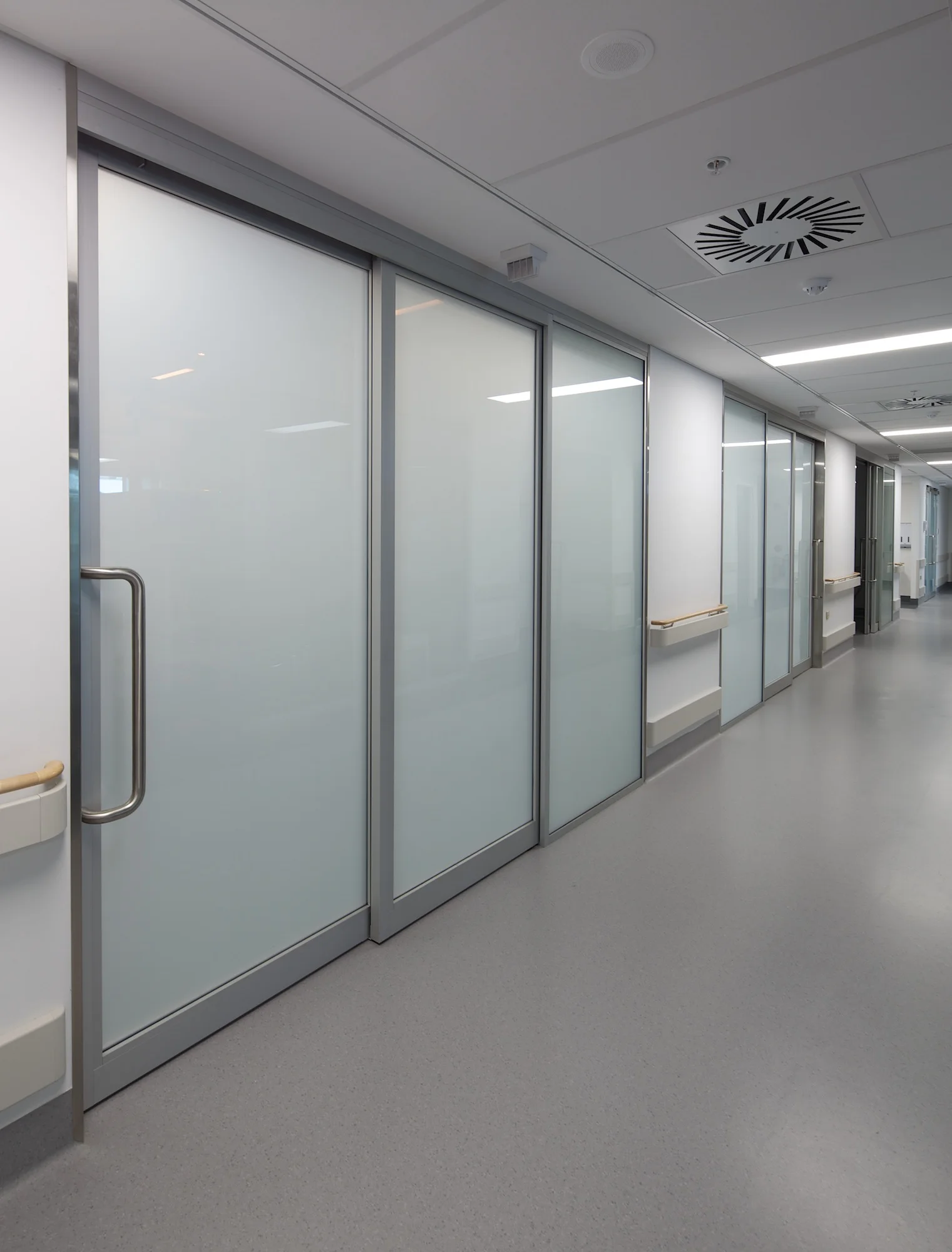
In hospital settings, switchable glass is typically used in spaces like ICU rooms, where patients, nurses and doctors need instant privacy at the flick of a switch. The glass changes between clear and frosted, so staff can maintain visual observation when needed and immediately provide privacy for examinations, procedures or personal care.
Instead of relying on curtains or blinds, the glass surface itself becomes the privacy barrier. This gives hospitals a clean, durable and practical way to manage privacy in high‑acuity areas.
Where is switchable glass used in healthcare facilities?
Intensive care and high‑dependency units
Most commonly, switchable glass is installed in ICU and high‑dependency units. Patients in these spaces are often immobile or critically unwell, so staff must be able to see them at all times but still protect their dignity when required. In many observation rooms, the glass is normally left in the clear state so nurses can supervise patients easily, then switched to translucent when privacy is needed.
Imaging, radiation and emergency areas
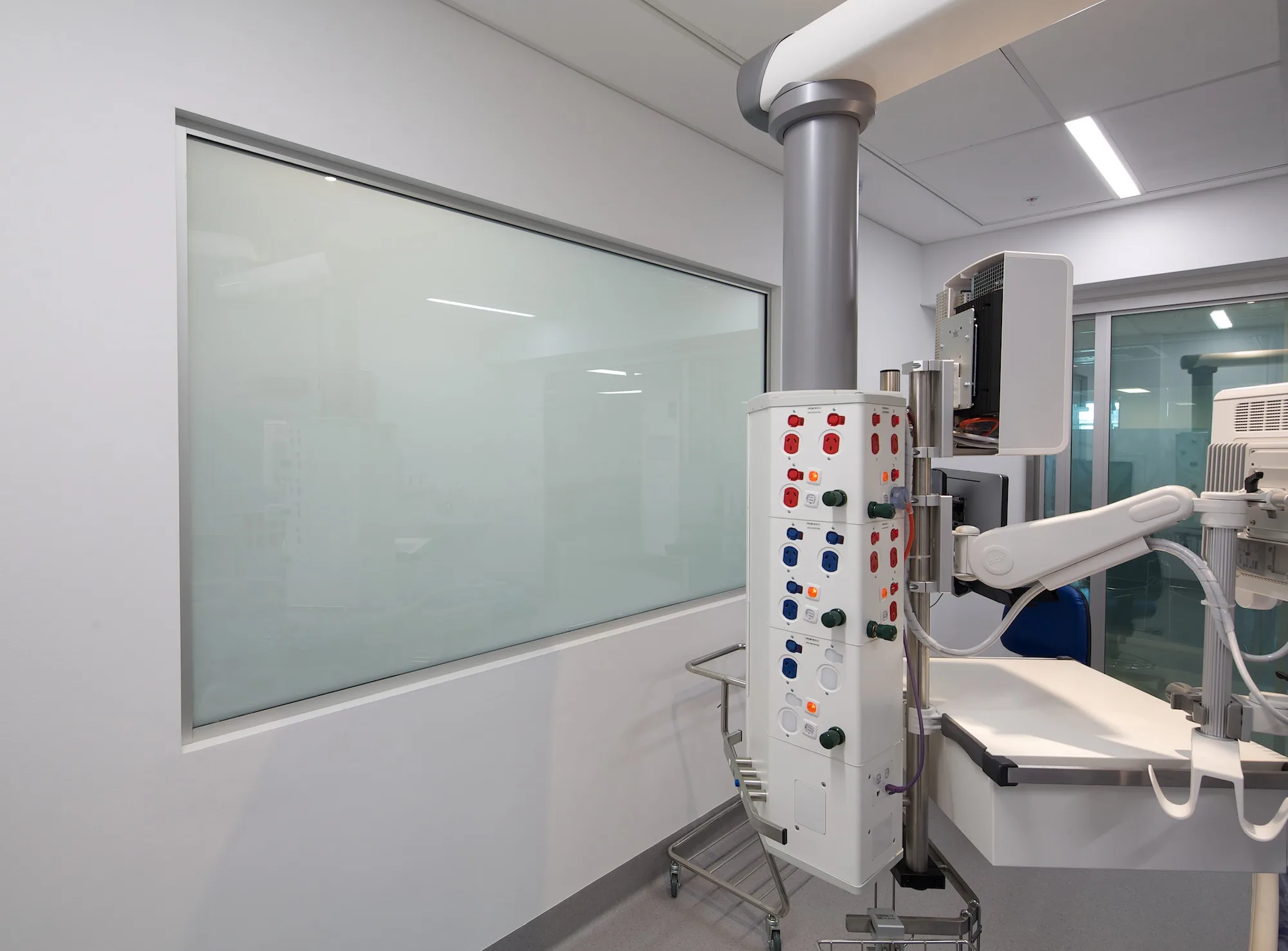
Switchable glass is also used in imaging suites and can be combined with leaded glass where radiation protection is required. This allows doctors and technicians who work around electromagnetic fields and radiation to maintain clear views when appropriate, then switch to frosted for patient privacy.
In emergency departments, speed matters. A simple flick of a switch can provide instant privacy around a bed or bay without staff having to draw curtains or move physical barriers.
Consulting, isolation and infection-control rooms
Consulting rooms, infectious‑disease isolation rooms and hermetically sealed spaces are further natural fits. In highly infectious cases, patients are kept in sealed rooms to prevent the spread of airborne pathogens. Switchable glass lets staff maintain visual contact and then provide privacy when needed, without breaking the integrity of the sealed environment.
Children’s wards and emergency imaging centres also benefit, because staff can shield young or vulnerable patients quickly while still keeping them visible when clinically necessary.
Infection control and patient dignity
Easier cleaning than curtains and blinds
From an infection‑control perspective, switchable glass eliminates the need to continually remove, launder and replace curtains between patients. While glass still needs to be cleaned, it is a smooth, non‑porous surface that is much less likely to harbour bacteria than fabric and other absorbent materials.
This reduces the handling of soft furnishings, simplifies cleaning protocols and supports a more hygienic environment around beds and procedure spaces.
Protecting dignity for immobile patients
Patient dignity and privacy are critical, especially for those who cannot move easily or manage their own environment. Switchable glass allows staff to provide privacy instantly for examinations, procedures and personal care, even if the patient is completely immobile.
This is particularly valuable in children’s wards, emergency imaging and other highly sensitive areas, where the psychological comfort of the patient and family is just as important as the clinical outcome.
Typical cost of hospital-grade switchable glass
For a locally produced, AS 2208‑certified switchable glass panel in a hospital, a typical ballpark is around $1,500 per square metre. Each panel is custom‑made to fit a particular opening, frame and clinical application.
The final cost depends on a number of factors, including:
- Panel size and thickness
- Cut‑outs for hardware or services
- Whether radiation shielding is required
- Frame and door type
- Complexity of the electrical design and control system
Because every hospital project is different, it’s important to assess openings and clinical requirements before setting a detailed budget, but this range gives facility managers and project teams a realistic starting point.
Critical compliance and electrical requirements
AS 3000 and hospital-grade transformers
Electrical compliance is non‑negotiable in medical settings. Switchable glass systems in hospitals must comply with AS 3000 and be designed specifically to protect patients and staff.
One key component is the transformer. Hospital‑grade transformers use dual slow‑blow fuses and are designed so that, even in the event of a fire or catastrophic failure, they cannot maintain live power if they melt or come into contact with a metal frame. This design greatly reduces the risk of electrical hazards around vulnerable patients and clinical staff.
Wiring, earthing and installation workmanship
Beyond the transformer, there are several critical installation details:
- All wiring should be two‑core, double‑insulated cable in line with AS 3000 requirements for medical environments.
- Frames, doors and windows must be correctly earthed, with glaziers using proper techniques to attach earth wires securely.
- Electricians need to understand the specific power loads and extra GPO requirements typical for ICU and other clinical rooms, and ensure transformers are installed in fixed, accessible locations close to the switchable glass.
These are not minor details; a compliant, safe installation depends on everyone in the chain—glaziers, electricians, engineers and facility teams—following the correct process.
What can go wrong with the wrong product or supplier?
Hospitals face real risk when switchable glass is treated as a commodity and purchased purely on the lowest price. There are many examples of companies entering the market to sell switchable glass using unproven films and low‑grade laminations, only to disappear a few years later.
In one large Australian project, a contractor was forced to spend more than a million dollars replacing an entire installation of low‑spec imported switch glass that began to delaminate and fail in under twelve months. Panels that look fine at practical completion can rapidly develop haze, bubbles, edge failures and electrical issues, particularly under the demands of 24/7 clinical use.
For hospitals, these failures are more than cosmetic. They can mean:
- Loss of privacy and dignity for patients
- Potential non‑compliance with infection‑control and electrical standards
- Significant downtime and disruption to critical services
- Costly rectification works and reputational damage for everyone involved
This is why proven materials, correct lamination (such as high‑clarity PVB) and long‑term supplier stability matter just as much as the headline price.
How Switchglass works with hospitals on replacement projects
Working with your preferred glaziers and electricians
Switchglass typically works alongside each hospital’s existing preferred glaziers and installers, rather than displacing them. The focus is on supplying proven, hospital‑grade switchable glass and certified power units, while supporting the teams you already trust on site.
Training and guidance are provided not only to the glaziers, but also to hospital electricians, external electrical contractors and in‑house engineers. The goal is to make sure every party understands the standards, wiring methods and safety requirements before work begins.
Replacement and upgrade pathway
Many hospitals start looking at replacement options once existing switchable glass systems approach or pass the 10‑year mark, or when failures become frequent. In these cases, a typical Switchglass replacement project involves:
- Removing existing power units and replacing them with fully certified units that meet current standards
- Supplying new, compliant switchable glass panels where needed
- Ensuring the overall installation—including wiring, earthing and controls—meets AS 2208, AS 3000 and the hospital’s own engineering requirements
Wherever practical, existing infrastructure is reused to keep the program economical and minimise disruption to clinical operations.
First steps for facility managers
Conduct a full privacy-glass audit
The best starting point is a structured audit of all switchable and privacy glass panels across the hospital. This audit should capture:
- Location and age of each panel
- Any visible issues (haze, delamination, failures)
- Current control and power arrangements
- Clinical criticality of the space (ICU vs back‑of‑house, etc.)
Switchglass can provide an audit checklist that facility and engineering teams can complete themselves. This gives a clear baseline of what you have, what’s working and where the risks are.
Plan a 12–24 month replacement program
Once the audit is complete, hospitals can prioritise which areas to address first—often starting with critical clinical spaces or panels that are already failing. Many facilities choose to put a 12–24 month replacement program in place, spreading cost and work over time while methodically retiring high‑risk systems.
This approach avoids “emergency replacements” and ensures every new panel is compliant, reliable and fit for purpose from day one.
Talk to Switchglass about your hospital
If you’re a facility manager, project manager or healthcare architect dealing with aging or failing switchable glass, or planning a new clinical build, Switchglass can help you:
- Audit existing switchable and privacy glass across your site
- Design a compliant, hospital‑grade replacement or upgrade path
- Work smoothly with your preferred glaziers and electricians
To request the audit checklist or discuss a specific project, contact Switchglass and ask for support with hospital switchable glass design or replacement.
CATEGORIES
- Architectural Applications (2)
- Hospital Applications (1)
- Know Your Product (15)
- Switchglass News (15)